Career outlook / Book industry
Publishing Jobs & Career Outlook: Where to Build Your Skills
A job board tells you what's open this week. A career decision has to last rather longer. If you're thinking about studying publishing, changing professions or taking an entry-level job at a small press, you'll want to know what the work looks like beyond the next hiring cycle.

Book publishing is not one profession with a few different business cards. It is a chain of decisions — acquiring manuscripts, shaping books, managing rights, preparing files, selling titles, finding audiences, maintaining metadata and getting the finished work to readers. New formats don't erase that chain. They alter it, sometimes in awkward ways.
This section examines the career landscape rather than presenting a fast-expiring list of openings. It does not report current vacancies, application deadlines or employer-specific hiring levels.
What Do the Employment Projections Actually Show?
The US Bureau of Labor Statistics projects the number of workers in different occupations across the whole economy. Its current 2025–2035 estimates point in different directions: editors −1%, graphic designers −2%, public relations specialists +2%, and market research analysts +7%.
Horizontal diverging bars of BLS projected employment change from 2025 to 2035 for editors, graphic designers, public relations specialists and market research analysts.
| Occupation | Projected change | Correct interpretation |
|---|---|---|
| Editors | −1% | Slight decline nationally; not book-only |
| Graphic designers | −2% | Slight decline nationally; not book-only |
| Public relations specialists | +2% | Modest national growth; not book-only |
| Market research analysts | +7% | Faster national growth; not book-only |
These figures are useful for context, but they do not rank the “most wanted publishing jobs.” BLS doesn't say that book publishers will hire 7% more audience analysts, and a small national decline in editors doesn't mean publishers have stopped recruiting. People retire, move between industries and change employers. Openings also come from replacement, not only growth.
A forecast is a map drawn at a broad scale. You still need to understand the actual terrain.
Editorial Careers Still Require Judgement
Editors assess manuscripts, work with authors and guide revisions. Acquisitions teams also think about readers, sales prospects and the cost of bringing a book into the world. Editorial assistants may handle schedules, permissions, submissions, proofs and communication long before anyone hands them a manuscript to develop. It's less romantic than the imagined life of a book editor, and more interesting.
Someone preparing for editorial work should build evidence of close reading, clear written feedback, deadline discipline and familiarity with book production. Copyediting and proofreading are different skills. So is commissioning. A candidate who can explain those differences often makes a stronger impression than someone who merely loves books.
The national BLS outlook for editors is slightly negative. That doesn't dictate the future of every imprint, genre or specialism. It simply argues against assuming that enthusiasm alone will secure a place. A fuller picture of the roles sits in our editorial careers guide.
Marketing, Publicity and Understanding the Audience
Publishing has always depended on finding readers. The channels change: bookshops, review coverage, social media communities, newsletters, library systems, retailer search and subscription platforms all shape discovery. Marketing and publicity work overlaps but is not identical. One may be concerned with campaigns and audience measurement; the other often handles media relationships, author appearances and reputation.
The BLS projections for PR specialists and market research analysts are positive across the economy, at +2% and +7%, respectively. We should not confuse those broad occupational forecasts with a promise about publisher hiring. They do show why skills in audience research, campaign measurement and clear communication are worth considering alongside a traditional literary background.
For a student, practical experience could be a small book campaign, an email newsletter with documented results or a thoughtful analysis of how a title found its readers. Learn to measure the outcome rather than count the posts. See marketing and publicity careers for how those jobs split in a publishing house.
Production and Design: Print Is Only Part of the Job
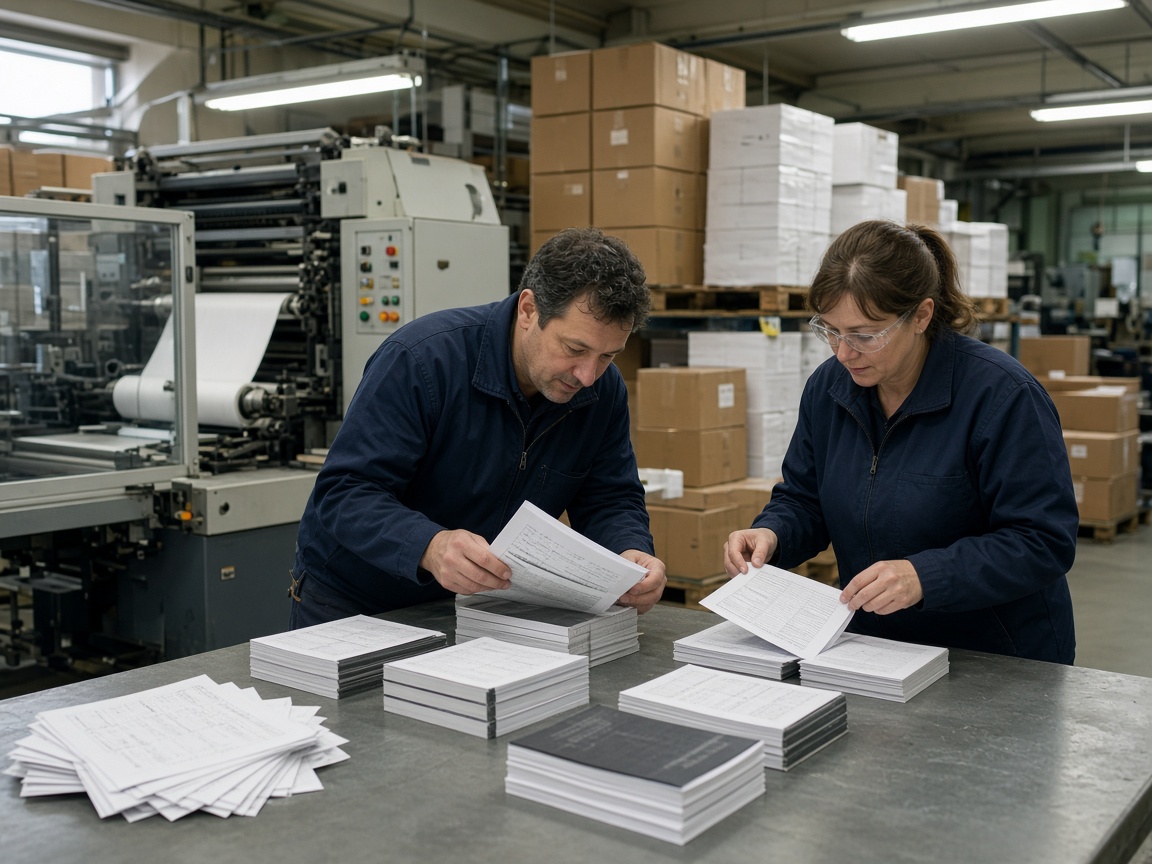
A cover has to sell the right impression, yes, but production involves many less visible decisions. Typesetting, proofreading cycles, accessible files, print specifications, colour management, supplier schedules and quality checks all affect the final product. Digital editions add their own complexity.
Graphic designers have a −2% national employment projection for 2025–2035. That figure includes design work across industries, not just books. It should not be translated into a recommendation to avoid book design. A serious portfolio showing typography, interior layout, file preparation and attention to accessibility may be more useful than trying to guess next decade's hiring numbers. The design and production careers guide takes cover, interior, print and ebook workflows in more depth.
Three Areas Worth Watching
Audiobooks and Audio Production
The Audio Publishers Association reported $2.43 billion in US audiobook sales in 2025, a 9% increase over 2024. That is a real market signal. It is not a measurement of new audio-production jobs. Still, work around narration, editing, quality control, rights, production coordination and distribution is part of understanding how books travel today.
For learners interested in sound, useful foundations include audio editing, careful listening, file management, production briefs, licensing basics and working with performers. Not everyone in this field needs to be a recording engineer. Publishing also needs people who can run the process.
Metadata and Discoverability
A great book can disappear into a retailer's database if its product information is poor. Titles, contributor credits, classifications, descriptions, formats, territories and availability have to reach the right channels accurately. ONIX for Books is a widely used metadata-exchange standard for the book supply chain.
Metadata is sometimes treated as an administrative afterthought. It shouldn't be. People entering publishing through operations, sales support or digital distribution can build useful skills here: spreadsheets, cataloguing discipline, consistent identifiers, error checking and an understanding of how product feeds work. This is a qualitative skills observation, not a measured forecast for a job title named “metadata specialist.”
Accessible Digital Publishing
E-books need to work for more readers than those who can comfortably use a standard screen. The W3C's EPUB Accessibility 1.1 Recommendation addresses accessibility and discoverability requirements for EPUB publications. Understanding accessible structure, alternative text, navigation and metadata gives production and editorial workers a better grasp of digital quality.
Accessibility is not a fashionable add-on. It's a practical part of making publications usable. Demand for these skills may be distributed across existing digital-production, editorial and quality-assurance roles rather than appear under a brand-new job label.
Which Skills Should You Learn First?
You do not need to collect certificates indiscriminately. Start with the work you want to try, then build something that proves you can do a piece of it. Small, finished examples matter more than generic claims of passion.
| Direction | Skills to develop | Small portfolio example |
|---|---|---|
| Editorial & acquisitions | Text evaluation, constructive edits, deadlines | An anonymised editorial assessment of a sample manuscript |
| Publicity & marketing | Copywriting, audience research, campaign reporting | A launch plan with audience assumptions and measurable goals |
| Book design & production | Typography, layout, file preparation, accessibility | A sample book interior and EPUB quality checklist |
| Rights & licensing | Contract literacy, territory awareness, organisation | A fictional rights-tracking spreadsheet clearly marked as a sample |
| Metadata & digital distribution | ONIX concepts, spreadsheet hygiene, product records | A sample catalogue record with consistent identifiers |
| Audiobook production | Audio workflow, file QC, licensing basics | A short original or rights-cleared audio production exercise |
None of these exercises needs to look like paid professional work. The point is to demonstrate what you understand, where you are learning and how you solve problems.
From Training to a Real Publishing Role
A student can start with internships, bookshop work, library projects, magazines, small presses, independent publishing collectives or volunteer work that genuinely teaches a skill. Experienced people can enter from marketing, customer support, design studios, logistics, technology or other creative fields. The industry isn't a single guarded doorway.
When you see an actual vacancy, judge it on evidence. Is the employer identifiable? Are the duties clear? Is the pay disclosed? Does the application process make sense? Is the role remote, hybrid or office-based, and what does that mean for the work? We recommend checking employers' current hiring pages directly when you're ready to apply. We do not reproduce their listings here or claim to monitor them live.
If you are still unsure where you fit, explore Career Paths, entry-level jobs and internships. If pay is the deciding factor, our Publishing Salaries guide separates reliable figures from industry folklore. Neither page can guarantee a job. They can make the decision to train for one a little less blind.
How to read the figures
Employment projections on this page are national occupational estimates, not book-industry hiring forecasts or live vacancy counts. Audiobook sales figures describe a market, not a count of new jobs. Professional standards such as EPUB accessibility and ONIX describe how work is done, not how many people a publisher will hire.
This guide combines occupational data, industry reporting and editorial review. Figures should be checked against the current employer, institution or public source before decisions are made.